From 9-to-5 to 24/7: How Small NZ Businesses Are Using AI to Outservice Bigger Competitors
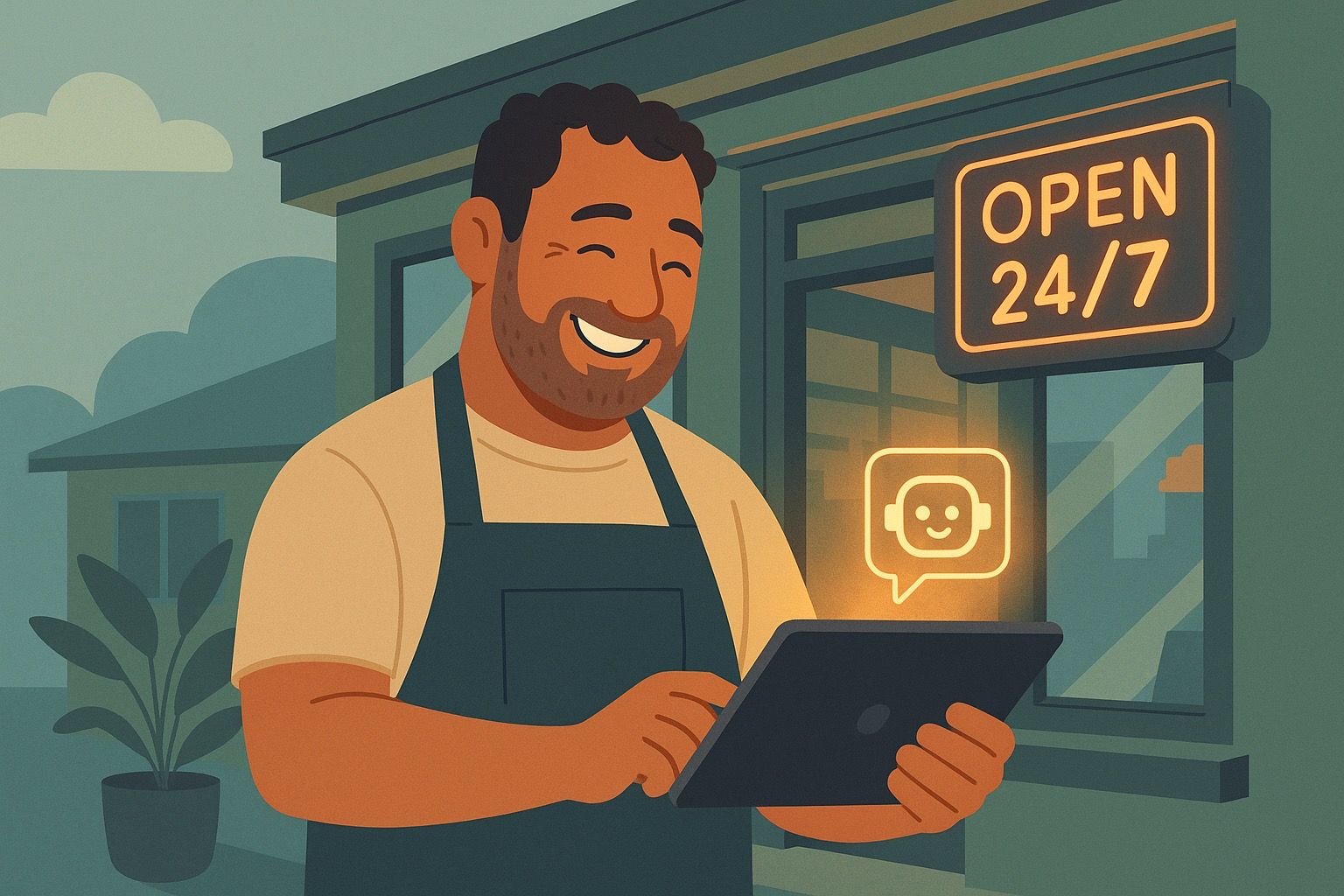
Picture this: it is 9pm on a Sunday. A potential customer in Whangarei has just found your website. They have a question about your services. They are ready to book. The only problem? Your phone line goes to voicemail, your email will not get read until Monday, and your biggest competitor is closed too — but they have a flash website and a receptionist who sometimes answers after hours.
That scenario is not a hypothetical. It is a real lost opportunity, playing out quietly every evening and weekend across New Zealand small businesses. But here is the thing: it is now completely solvable. And it does not require a full-time receptionist, a big marketing budget, or a computer science degree.
The Gap Is Smaller Than You Think
For years, the businesses that could afford to be always-on had a structural advantage. Big players hired receptionists, ran extended hours, and had staff ready to respond to inquiries at any time. Small businesses could not compete on that basis — it simply did not add up financially.
That equation has changed. AI-powered chatbots and virtual assistants have made 24/7 customer interaction affordable for businesses of any size. And New Zealand small businesses are starting to notice.
What This Actually Looks Like
An electrician in Christchurch now handles booking enquiries and basic fault queries through a chatbot on his website. He still does the work himself, but the chatbot handles the back-and-forth: explaining common electrical faults, providing indicative pricing for common jobs, and flagging genuine emergencies. He is not working at 9pm — but his business is.
A Rotorua holiday lodge uses a chatbot to handle booking enquiries and cancellation questions around the clock. A Christchurch automotive shop has significantly reduced phone tag — customers get answers about battery replacements, tyre services, and scheduling outside business hours. None of these businesses are in the tech industry. None of them hired a developer to build this.
The AI Tools NZ Businesses Are Actually Using
The most popular routes right now are platforms like Tidio, Intercom's Fin, and the AI features built into Shopify and other major platforms. These are not experimental — they are production-ready tools that a tradie, a retailer, or a professional services business can set up in days, not months.
The point is not to replace human interaction. It is to make sure the routine stuff — the FAQs, the booking confirmations, the basic technical questions — is handled automatically so your team can focus on the conversations that actually need a human.
The Numbers Back It Up
Most small businesses implementing AI chatbots report meaningful return on investment within three to six months. Some see payback in under 90 days. Beyond the direct financial return, there is also the customer experience benefit: modern customers expect fast responses, and a business that can offer that — without burning out its staff — earns trust and loyalty.
Government Support Available Now
New Zealand's Government launched an AI Advisory Programme in January 2026, offering up to $15,000 in co-funding for eligible small businesses working with approved AI consultants. If you have been wondering whether to take AI seriously, this is a practical signal that the time is now — and there is support available to help you do it properly.
A Quick Note on Getting Started
If you are wondering whether this is relevant to your business, ask yourself one question: what is the most common thing people ask you or contact you about? That is where AI can make the most immediate difference. You do not need to automate everything at once. You need to automate one thing well.
The Bottom Line
Big businesses will always have structural advantages. But the gap in customer experience is closing — and it is closing fast. The tradie in Whangarei, the retailer in Napier, the consultant in Wellington: they can now offer the kind of responsive, always-on service that used to require a full-time admin team.
The question is no longer whether you can afford to do this. It is whether you can afford not to.