Why Small Businesses Need to Stop Thinking AI Just Means ChatGPT
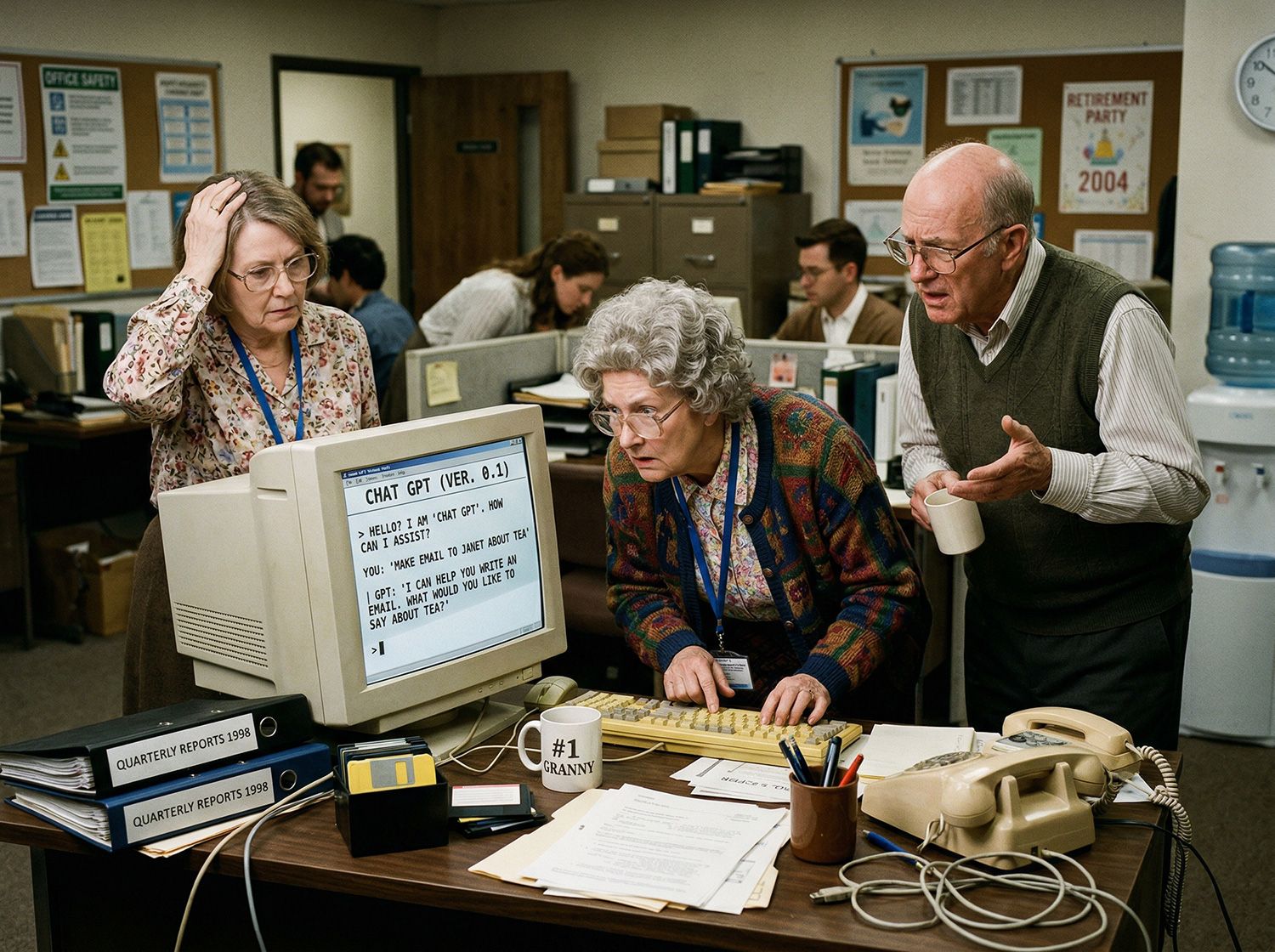
For a lot of small businesses, “using AI” currently means one thing: opening ChatGPT and asking it to write a social media post, a blog intro, or a polite email.
That’s not nothing. It’s useful. But it’s also a bit like saying your entire website strategy is “we have a logo”.
ChatGPT is one tool. AI is a much bigger shift.
And the businesses that understand that early are going to get a serious advantage.
The mistake small businesses are making
A lot of business owners hear “AI” and think of a chatbot that writes words. They think content machine. Blog helper. Fancy autocomplete.
That’s the most visible bit, so fair enough.
But it also means many small businesses are missing the practical, boring, money-saving side of AI — which is where the real value often lives.
AI is not just for writing LinkedIn posts and pretending your marketing is modern.
It can help with:
-
sorting and summarising enquiries
-
speeding up admin
-
generating first drafts for quotes and proposals
-
handling repetitive customer questions
-
analysing trends in your business data
-
improving website content and SEO workflows
-
turning messy information into something useful
-
automating parts of your follow-up and sales process
That’s where things get interesting.
ChatGPT is the front door, not the whole house
ChatGPT is often the first AI tool a business tries because it’s easy. You type in a prompt, it gives you an answer, and you feel like you’re in the future.
But if that’s where the conversation stops, you’re barely scratching the surface.
Using ChatGPT on its own is a bit like hiring one very fast intern who never sleeps, but needs supervision and occasionally makes things up.
Useful? Absolutely.
Enough to transform your business? Not by itself.
The real shift happens when AI moves from being a novelty tool to being part of how the business actually operates.
Where small businesses can use AI properly
Let’s make this less fluffy.
Here are some areas where AI can be genuinely useful for small businesses right now.
1. Customer service and enquiry handling
If you get the same questions over and over again, AI can help.
That doesn’t mean replacing humans with robotic nonsense. It means speeding up first responses, sorting enquiries, drafting replies, and helping customers get answers faster.
Done properly, it gives your team more time for the conversations that actually need a human brain.
2. Admin and operations
This is the unsexy bit, which is exactly why it matters.
AI can help summarise documents, pull information out of emails, draft meeting notes, organise research, and reduce the amount of repetitive keyboard sludge your team deals with every week.
Nobody starts a business because they dream of copying data between systems. AI is quite good at taking some of that pain away.
3. Marketing beyond “write me a caption”
Yes, AI can help write content. Fine.
But it can also help with:
-
topic research
-
SEO outlines
-
email ideas
-
ad variations
-
audience segmentation
-
content repurposing
-
identifying content gaps on your website
That’s a much better use of it than blindly posting whatever a chatbot spits out and hoping for the best.
4. Sales support
AI can help qualify leads, summarise calls, suggest follow-up actions, and make sure warm prospects don’t go cold because everyone got busy.
For a small business, that matters. Opportunities are often lost not because the business is bad, but because the process is messy.
5. Decision-making
Small businesses are often sitting on useful information without doing much with it.
Sales patterns. Customer questions. Website enquiries. Product interest. Seasonal behaviour. Common objections.
AI can help turn that pile of chaos into something readable and actionable.
Not magic. Just faster clarity.
The real value is not “AI content”
This is the bit people miss.
The real value of AI for small businesses isn’t just making more content. The internet does not need more bland, beige, auto-generated nonsense.
The real value is:
-
saving time
-
removing friction
-
improving consistency
-
helping your team focus on better work
-
making the business feel more responsive and less chaotic
That’s a far better outcome than “we used ChatGPT to write 14 average Instagram captions”.
The other mistake: expecting AI to be magic
There’s another trap here.
Some businesses dismiss AI because they tried ChatGPT once, got a mediocre answer, and concluded the whole thing was overhyped.
That’s a bit like hiring a junior staff member, giving them no context, asking them to “do some marketing”, then acting shocked when the result is vague rubbish.
AI still needs:
-
direction
-
context
-
editing
-
human judgement
-
a proper workflow around it
It’s a tool, not a miracle.
The businesses getting value from AI are usually not the ones asking it random questions for fun. They’re the ones using it intentionally inside real processes.
Small businesses actually have an advantage here
Big companies have more money, but they also have more bureaucracy, more legacy systems, and more people slowing every decision down.
Small businesses can move faster.
They can test tools quickly, change workflows easily, and see results without a six-month committee meeting.
That means small businesses are actually in a strong position to use AI well — if they stop thinking of it as just a chatbot for writing words.
So what should a small business do?
Start with problems, not tools.
Ask:
-
What takes too long?
-
What gets repeated all the time?
-
What falls through the cracks?
-
What annoys the team every week?
-
What stops leads from turning into customers?
-
What website and marketing work is being done badly or inconsistently because nobody has time?
That’s where AI should begin.
Not with “we should use AI because everyone else is”.
That’s how you end up with gimmicks.
Final thought
If your idea of AI is still just “that thing that writes blog posts”, you’re not alone.
But you are behind the curve.
AI is becoming part of how businesses answer enquiries, manage admin, support customers, improve marketing, and run more efficiently.
ChatGPT is part of that picture. It’s just not the whole picture.
And for small businesses, that’s actually good news.
Because once you stop treating AI like a toy, it starts becoming useful.